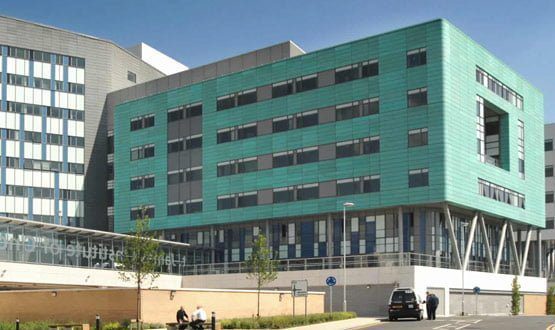

There are many medical facilities in Leeds that help the residents monitor their health. In this article, we will tell you about Leeds Teaching Hospitals NHS Trust, which was established in 1998 and is actively developing in the modern period. Learn more about it at ileeds.info.
What is known about Leeds Teaching Hospitals NHS Trust?
Leeds Teaching Hospitals NHS Trust was formed in 1998 following the merger of two other NHS trusts. It was aimed at creating a single city-wide organisation.
The trust provides services for 770,000 people and up to 5.4 million people with regional specialist care. In addition, Leeds Teaching Hospitals NHS Trust is considered a regional centre that offers oncology treatment, heart surgeries, liver and kidney transplantations and neurosurgery.
It should be noted that it became England’s largest NHS trust in 2009, employing more than 18,000 people.
Development of the trust
Leeds Teaching Hospitals NHS Trust is constantly growing and is the largest provider of specialist services in England. Thus, the trust received an income of £415.3 million in 2014-2015. A significant amount of investment is allocated to the development and renovation of hospitals under Leeds Teaching Hospitals NHS Trust.
- In 2017, a dedicated Research and Innovation Centre was opened at St James’s Hospital. Three years later, a Clinical Research Centre was opened in the same medical institution.
- In 2018, the six-bed Children’s Clinical Research Facility was opened at Leeds Children’s Hospital.
- In 2019-2020, Leeds Teaching Hospitals NHS Trust launched 231 studies.
- In 2020, the Leeds Cancer Research Centre was founded, as a partnership project between the University of Leeds and Leeds Teaching Hospitals NHS Trust. Its scientists conduct research into oncology. As a result of their studies, patients receive improved treatment.
Trust’s medical institutions
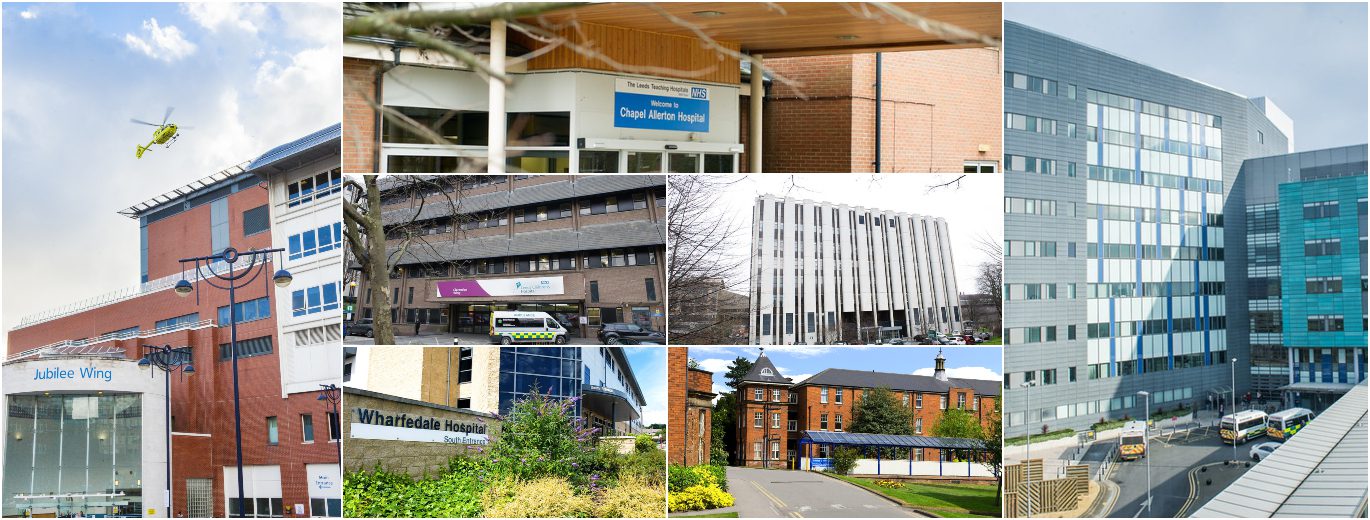
Leeds Teaching Hospitals NHS Trust includes such hospitals and healthcare facilities as
- Chapel Allerton Hospital. This medical facility is located in the Chapel Allerton area. The history of the hospital began in 1927 when it cared for wounded soldiers during the First World War. It should be noted that the facility was built on the territory of the Gledhow Grove mansion. In 1953, the hospital was transferred to the Ministry of Health. After that, it started to develop as a general hospital. In 1975, it moved to a newly built building on Harehills Lane and in 1992-1994 a new accommodation was built on the site.
- Leeds Dental Institute. This dental health facility is located in the Worsley Building. It appeared in 1904 as a dental department of the Leeds Public Dispensary. After 16 years, the dental department moved to the Leeds General Infirmary and a few years later to its own premises. In 1948, the institution joined the National Health Service. In 1978, it moved again to the Worsley Building.
- Leeds General Infirmary, also known as the LGI. The medical appeared in 1771. At first, the hospital functioned on the premises of a former bank. Subsequently, the construction of Leeds General Infirmary began on its current site. The project was developed by Sir George Gilbert Scott. Before the construction, he and the Chief Physician visited many European medical institutions. The hospital was built in 1868 and a year later the first patients appeared. Leeds General Infirmary was constantly developing and acquiring new premises. Therefore, it provides many medical services and even has a helipad on the roof.
- St James’s University Hospital. The history of this medical institution began in 1848. At that time, the hospital operated on the territory of the Leeds Moral and Industrial Training School. During the First World War, the facility treated soldiers and was called a war hospital. From 1881, Dr James Allan was its Medical Superintendent. The medical institution was later named in his honour. The hospital began to expand in 1948 and in the 1960s, it started to be reconstructed. In 1970, the medical institution received its modern name, St James’s University Hospital.
- Seacroft Hospital. The history of this medical institution began in 1893 when it was decided to create an infectious disease hospital. Initially, it was a tented hospital at the Seacroft Estate. The modern premises of the hospital were built in 1904. At the time of opening, the facility had 482 beds. The Seacroft Specialist Rehabilitation Centre was opened in 2006.
- Wharfedale Hospital. At first, it was an infirmary built in 1873. 70 beds were added to it in 1907. Later, the infirmary became a County Institution. It joined the National Health Service in 1948. In the 1990s, it was decided to build a new building for the hospital.
- Leeds Children’s Hospital. It is one of the largest children’s hospitals in Great Britain. The medical staff and workers here do everything possible to make the sick children feel comfortable and recover faster.
We hope our informative article was interesting and you learned a lot of new information.