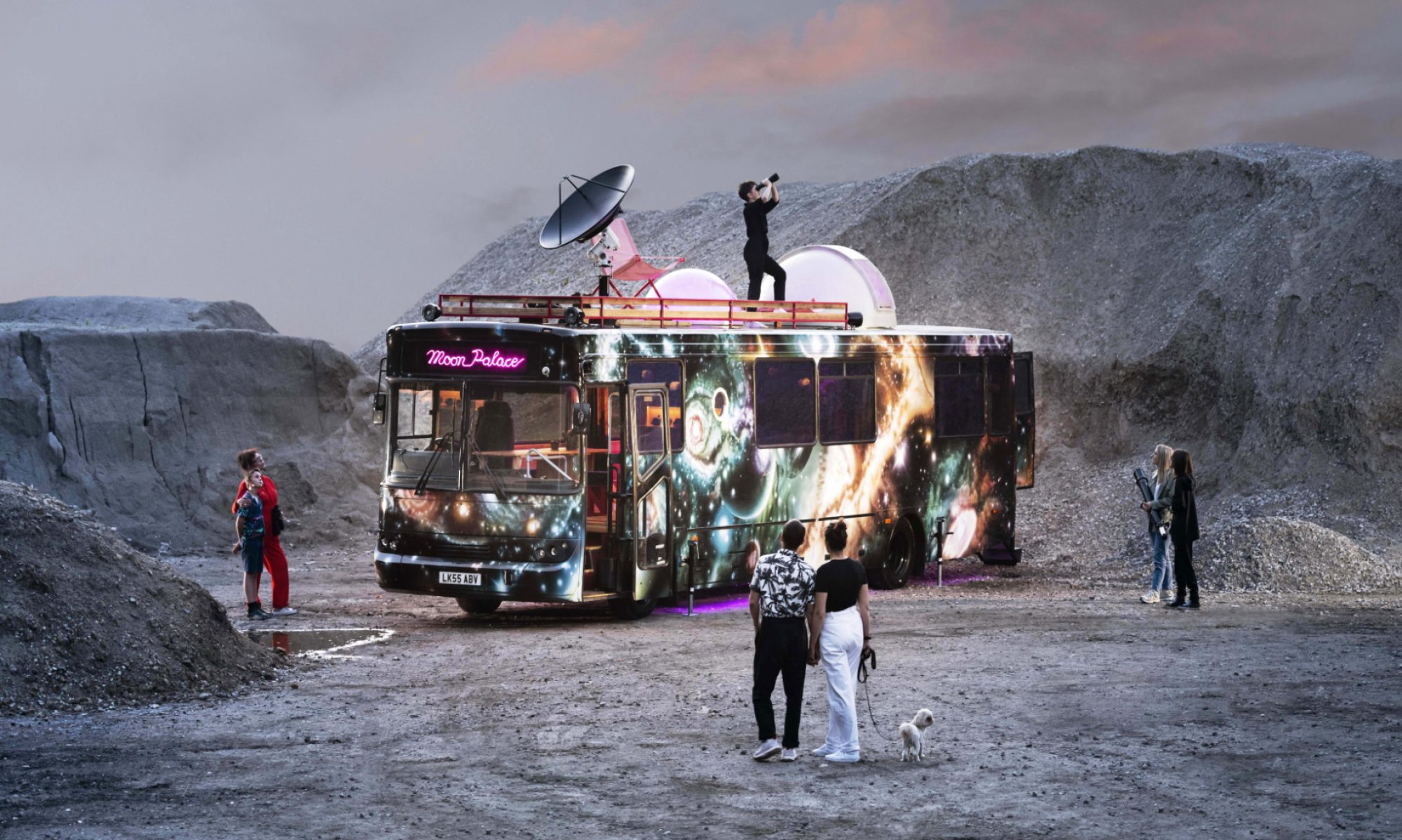
The fascinating “Moon Palace” project was created to honour John Smeaton, the first British civil engineer, scientist, and artist. A native of Leeds, Smeaton made a significant impact on the world. Learn more at ileeds.
John Smeaton is considered the “father of civil engineering” in Great Britain, and his legacy remains unique and timeless. He pioneered the construction of canals, roads, bridges, and more. Smeaton believed fervently in using engineering for public benefit rather than for military purposes. A brilliant innovator, he built the third Eddystone Lighthouse off the coast of Cornwall, devised a plan to stabilise London Bridge, and developed the concept known as Smeaton’s coefficient, which the Wright brothers used in their creation of the first aeroplane. Additionally, Smeaton was an avid astronomer, founding an observatory in his home in East Leeds where he gazed at the stars and the Moon every evening.

The Main Idea Behind “Moon Palace”
On the eve of John Smeaton’s 300th anniversary, prominent artists Heather Peak and Ivan Morison created a unique mobile observatory. This ambitious project was supported by experienced scientists from the School of Physics and Astronomy and the Leeds Astronomical Society.
The original concept of a mobile observatory came from the East Leeds Project. The team aimed to transform perceptions of East Leeds by showcasing the beauty and vastness of the sky above this part of the city. Their goal was to create a travelling observatory that would inspire people to observe both the sky and the world around them. Through collaboration with LEEDS 2023, they successfully developed a mobile structure that functions as a working observatory, a creative laboratory for art and science, and a piece of public art. The observatory also serves as a space for collective discussions, observations, and studies under the sun, moon, and stars. On board the “Moon Palace,” visitors are warmly welcomed, treated to cosmic tea, and invited to engage in conversations with artists and scientists. Note that the bus has a limited capacity of 12 people, so queuing might be necessary.
The project was commissioned by Foxglove and LEEDS 2023 for Smeaton300, supported by The National Lottery Heritage Fund.
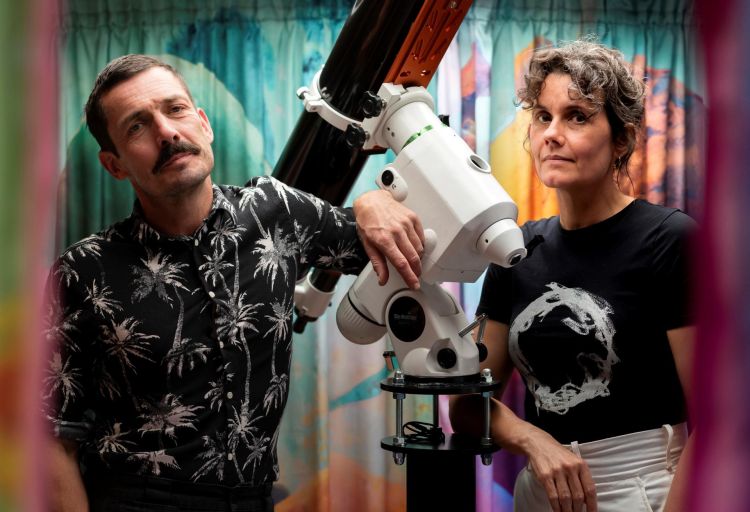

The Bus as a “Collision of Creativity, Art, and Science”
The “Moon Palace” is a 55-seat school bus transformed into a stunning observatory. Artists Heather Peak and Ivan Morison blended art and science, working closely with local scientists and academics.
Initially, various vehicles were considered for the project, but it was essential to ensure accessibility for wheelchair users. The idea of converting the bus into a hybrid or fully electric vehicle was explored early on but was ultimately abandoned due to additional costs.
Heather Peak and Ivan Morison dismantled the school bus, redesigning it to include a telescope, radio dish, monitors, and even a kitchen. They removed all seats and installed a large telescope in collaboration with the Leeds Astronomical Society. The bus features two domes on its roof, housing a powerful telescope and a radio antenna, enabling the “Moon Palace” to function as a full-fledged astronomical observatory. A massive satellite dish on top collects radio signals from celestial objects across the universe. On board, scientists process these signals so visitors can view and even listen to them. Clear night skies offer guests the chance to observe galaxies and use a radio telescope developed by students and staff from the School of Physics and Astronomy.
The bus is also equipped with binoculars and books, providing visitors with a space to relax, reflect, and document their observations.
A key feature of the bus is its ability to power onboard equipment, such as computers and telescopes, without relying on its engine or an external generator. This is achieved through onboard batteries that can be charged during downtime, enabling continuous autonomous operation.
While touring, the “Moon Palace” runs on diesel. Although not the most environmentally friendly option, this limitation arises from the bus’s age and engine design. The team considered switching to hydrotreated vegetable oil as a more sustainable alternative but found it unsuitable for the engine. Additionally, the same system powers the bus’s heating during colder months, ensuring passenger comfort while stargazing.
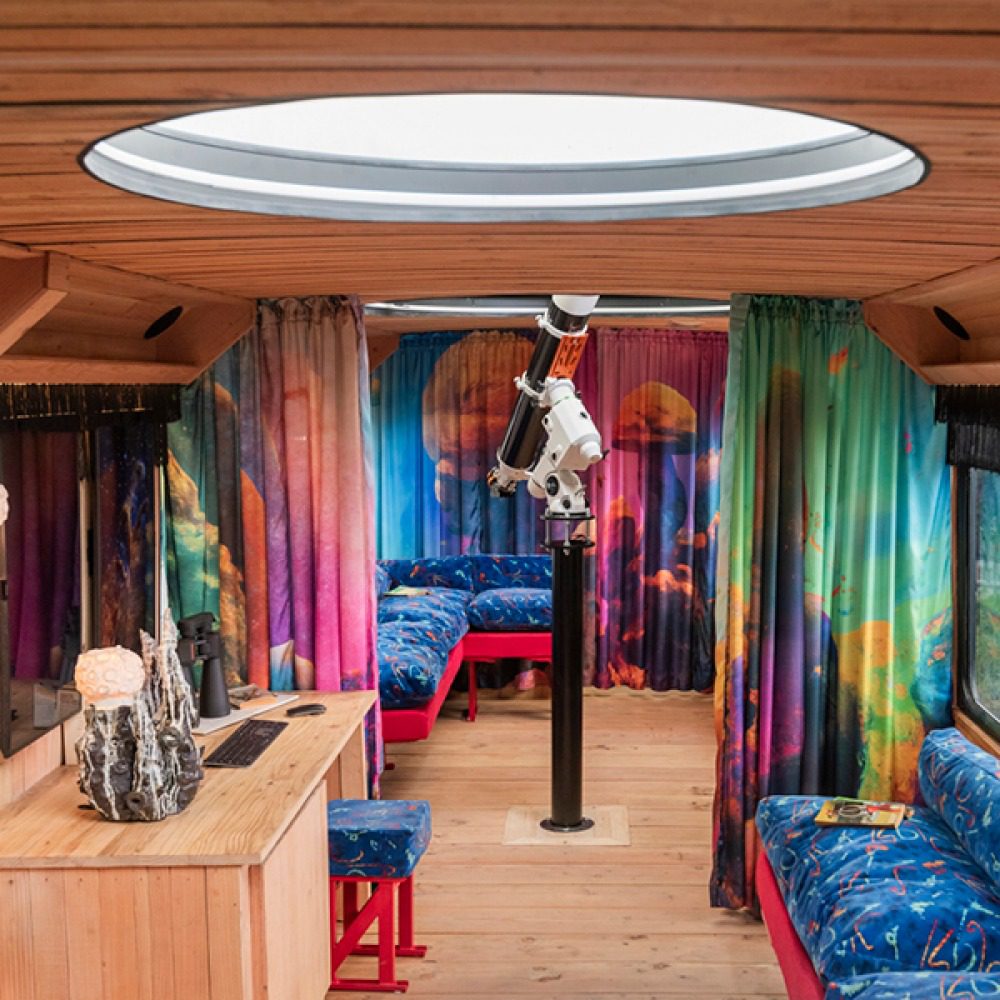
The Unusual Design of the Mobile Observatory
To captivate and intrigue future visitors, the team worked meticulously on the “Moon Palace’s” exterior and interior design. Talented artist Ciaran Davies painted a fantastical universe and extraordinary planets on the observatory’s exterior. The soundscape, created by gifted composer Alex de Little, enhances the sensory experience. De Little’s immersive audio design allows guests to delve deeper into the cosmic environment aboard the “Moon Palace.”
Inside, the space is a fantastical, tactile environment resembling the surface of an imaginary planet. The interior is clad in wood from the forests of West Wales. Comfortable seating, silk-printed screens, porcelain moon-shaped lampshades, and an alien-looking teapot and mugs add to the unique atmosphere. LED lighting ensures efficient energy use while providing ample illumination. The organisers also created a special blend of cosmic tea, served exclusively on board.
The “Moon Palace” observatory is a mysterious and enchanting place where visitors can sip aromatic tea, read a book, and observe the world around them. In interviews, Ivan Morison emphasises that the “Moon Palace” was designed for guests to explore the galaxy through a radio telescope or simply enjoy their time onboard—meeting new people, engaging in conversations, reading detective novels, or even taking a nap.
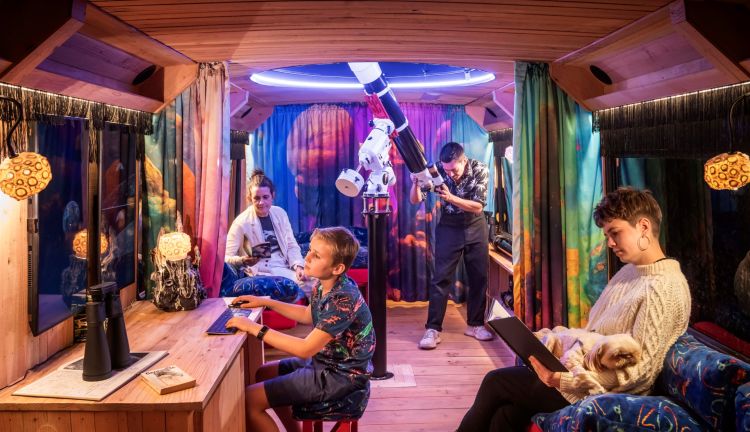
Travelling with “Moon Palace”
As part of an educational initiative, the “Moon Palace” observatory bus travels the streets of Leeds. Decorated with stunning lunar imagery and equipped with state-of-the-art telescopes, it offers students a rare opportunity to explore the mysteries of the night sky. This initiative, aimed at promoting astronomical education, has received positive feedback from schoolchildren, students, and educators.
The “Moon Palace” travelling educational project brings students closer to the wonders of the universe. Children participate in interactive activities, from identifying constellations to closely observing the Moon’s surface through powerful telescopes. Such hands-on experiences help reinforce the information they learn during astronomy lectures.
Thus, the “Moon Palace” is much more than a mobile observatory—it is a work of art that harmoniously blends creativity and practicality, art and science. It is a unique space that warmly invites visitors to pause, look into another world, and explore the vastness of the universe in the company of like-minded individuals.