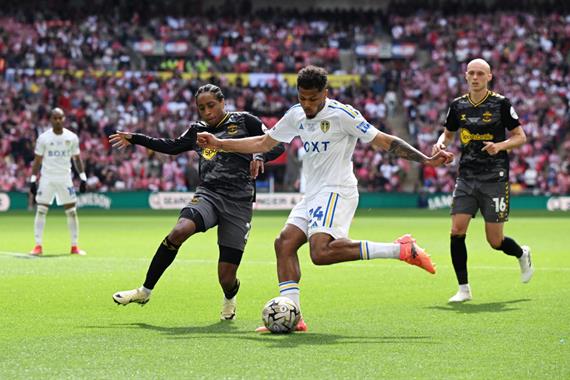

Leeds is a city deeply intertwined with sports, boasting a legacy of athletic achievements, events, and talented players. Among its most iconic institutions is Leeds United Football Club, a team with a storied history full of triumphs, setbacks, and remarkable moments. Let’s take a closer look at the fascinating journey of Leeds United. Next on ileeds.info.
Founding of Leeds United
The story of Leeds United began in 1904 with the establishment of their predecessor, Leeds City FC. However, after 15 years, Leeds City was dissolved in 1919 due to financial irregularities. Determined to keep football alive in the city, Leeds United was formed the same year, led by former player Dick Ray.
In 1920, Hilton Crowther, chairman of Huddersfield Town, invested in the club. Leeds United was soon elected into the Football League, entering the Second Division.
The team’s first official league match, played against Port Vale, ended in defeat, but Leeds secured their first win just a week later.
The 1923-1924 season brought their first major success, as Leeds won the Second Division title with 54 points. Promotion to the First Division followed, though the club struggled to maintain consistent form, frequently moving between divisions.
Early Challenges and Inconsistencies
In its early years, Leeds United faced inconsistent performances, alternating between moments of promise and decline.
In the 1934-1935 season, Leeds adopted a half-yellow, half-blue kit, a nod to their predecessor, Leeds City. Around the same time, the club introduced its first official badge, featuring the Leeds city crest.
Following the Second World War, Leeds United experienced a difficult period, finishing at the bottom of the First Division with only 18 points. Significant changes were made, including a focus on younger players and new managerial leadership. Under manager Raich Carter, Leeds began to show improvement, earning promotion back to the First Division in the 1955-1956 season.
A key player during this time was John Charles, who helped transform the club’s fortunes. However, his transfer to Juventus for £65,000 in 1957 marked a turning point, and the club struggled in his absence.
The Golden Era: Don Revie’s Leeds
The 1960s and 1970s were the most glorious years in Leeds United’s history, largely thanks to the leadership of manager Don Revie. Under Revie, Leeds United became a dominant force in English football, achieving:
- 2 English league titles
- 1 FA Cup
- 1 League Cup
- 2 Inter-Cities Fairs Cups
- 1 Charity Shield
Leeds also reached the finals of the Cup Winners’ Cup in 1973 and the European Cup in 1975.
Revie’s success stemmed from his focus on team building and talent development. He changed the club’s colors to all-white to symbolize ambition and emulate Real Madrid’s success. His meticulous approach and belief in young players turned Leeds into a footballing powerhouse.
Leeds United in the Modern Era
In the early 2000s, Leeds United entered a turbulent phase. By 2004, the club was burdened with debts exceeding £100 million. Relegation in 2007 further compounded their struggles, and ownership disputes added to the uncertainty.
Amidst financial troubles, Leeds United’s fans rallied to support the club. In 2007, supporters adorned the Billy Bremner statue at Elland Road with scarves, flowers, and messages of encouragement, demonstrating their unwavering loyalty.
In 2011, businessman Ken Bates assumed ownership of Leeds United. The club gradually stabilized, achieving financial recovery and improved results on the pitch.
A new chapter began in 2017 when Italian businessman Andrea Radrizzani acquired full ownership of Leeds United and Elland Road stadium. Radrizzani’s leadership marked a renewed focus on rebuilding the club, both financially and competitively.
The history of Leeds United is a story of resilience, passion, and unwavering support. From its beginnings in 1920 to its golden era under Don Revie and modern-day rebirth, Leeds United has remained an iconic part of football history.
Through victories and hardships, Leeds United continues to inspire generations of fans, proving that football is more than just a game—it’s a legacy.
Are you a supporter of Leeds United? Share your thoughts and memories with us on social media—we’d love to hear from you!