

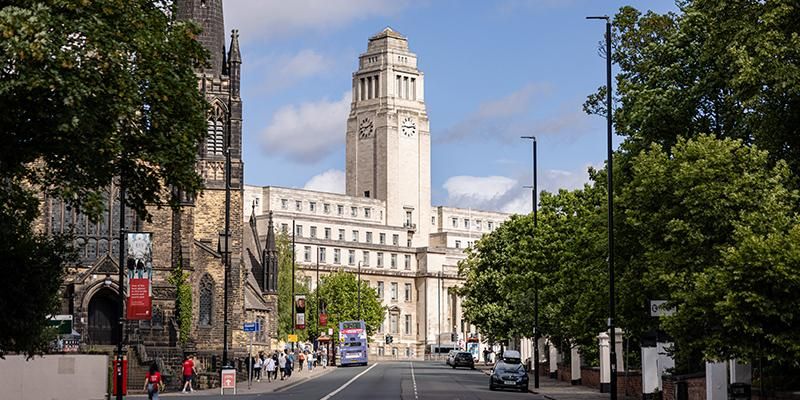
Education plays a vital role in our lives, and teachers are at the heart of this journey. Today, we will explore the life and achievements of Joseph Hubert Priestley—an esteemed educational researcher, professor of botany, and pro-vice-chancellor of the University of Leeds. Priestley was instrumental in attracting numerous postgraduate researchers to Leeds. Read more about his inspiring contributions and legacy at ileeds.info.
Early Life and Education: What is Known
Joseph Priestley was born in 1883 in Tewkesbury. He grew up in a large family, being the eldest of eight children. His father served as the headmaster of the local school, where Joseph and his siblings received their early education.
In 1897, Priestley successfully passed a local Cambridge examination, and a year later, he completed a physical geography course at Science Hall on Oldbury Road. By 1900, he earned first-class results in the London Matriculation Examination. The following year, University College, Bristol awarded him the Capper Pass Scholarship in metallurgy worth twenty-five pounds. Notably, this was not his only academic achievement. In 1902, he was granted the John Stuart Scholarship, and in 1903, he received a probationary scholarship of seventy pounds to study the cell biology of rust fungi.
Career Development
Priestley’s professional career began at University College, Bristol, in 1904. Initially, he worked as a college assistant and was later appointed as a temporary lecturer in botany. Alongside teaching, Priestley conducted significant research into photosynthesis processes and products. In 1906, he co-published a paper with Francis Asher, which demonstrated that chlorophyll in vitro could be reduced to formaldehyde in the presence of carbon dioxide and light.
In 1908, the college secured a grant to investigate the impact of electricity on plants. Priestley’s research demonstrated that electrical stimulation could encourage plant growth.
By 1911, Priestley had earned the title of Professor of Botany, and three years later, he became an examiner in the Natural Sciences Tripos at Cambridge University. However, the outbreak of World War I interrupted his academic activities. Priestley instead commanded the University Officers’ Training Corps in both Bristol and Leeds.
In 1914, Priestley was deployed to France with the British Expeditionary Forces and later served in the intelligence brigade of the General Staff. His wartime contributions earned him the Distinguished Service Order (DSO) and the title of Chevalier of the Belgian Order of the Crown.
After the war, Priestley returned to Leeds, where he initiated an extensive research programme on the structure and development of plant growth points and the effect of light on plant growth.
In 1924, Priestley was appointed President of the Yorkshire Naturalists’ Union and became a member of the British Biological Society. In 1926, he travelled to California to teach postgraduate courses at the University of California, Berkeley.
Priestley also played an essential role in the city of Leeds. He became the first warden for male students and organised numerous public events, contributing to the cultural and academic development of the city.
Personal Life
Joseph Priestley’s personal life was as fulfilling as his professional career. He married Marion Ethel Young, an amateur botanist who shared his passion for nature. Marion was also a member of the British Mycological Society and actively organised events at the University of Leeds alongside her husband.
The couple had two daughters: Phyllis Mary and Anne Elizabeth.
- Phyllis Mary, their eldest daughter, studied at Cheltenham Ladies’ College in Leeds and worked at Girton College, Cambridge.
- Anne Elizabeth, the younger daughter, excelled academically. She attended the same college as her sister and later became President of the Cambridge University Women’s Boat Club. Anne earned a bachelor’s degree, followed by the Theresa Montefiore Memorial Prize and a master’s degree from Cambridge University. She also lectured in geography at the University of Leeds, led the Geography and Theology Department at the Perse Girls’ School on Panton Street, and was a member of the Institute of British Geographers and secretary of the Cambridge Christian Education Movement.
Tragically, Priestley did not live to witness his daughters’ remarkable achievements. In 1935, he fell seriously ill and underwent surgery. He passed away in 1944. His funeral was attended by many university colleagues and distinguished educators, and his ashes were scattered in the crematorium gardens.
Following his death, a memorial trust fund was established to provide grants for botany students at the University of Leeds.
Joseph Hubert Priestley’s life was a testament to his dedication to education, research, and the city of Leeds. His contributions to botany and academia left an enduring legacy, inspiring generations of students and researchers.