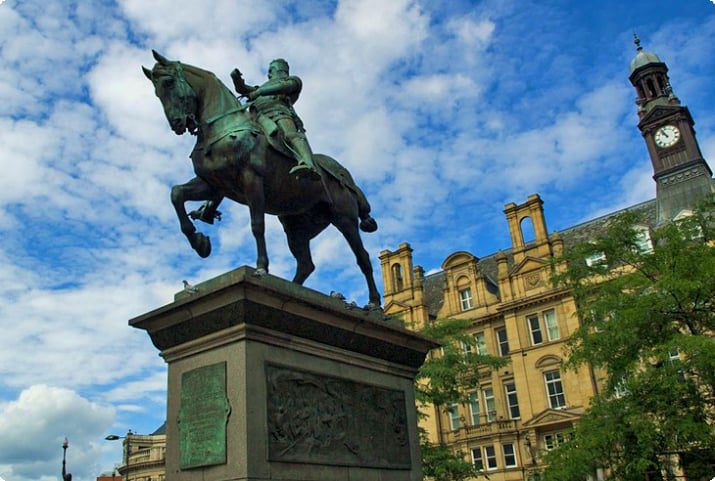

Leeds is an incredibly beautiful and culturally rich city with its own unique character. It boasts a distinct history, culture, traditions, and customs. Each year, thousands of tourists visit our city, as Leeds is one of the leading cultural centres in the United Kingdom. Its culture has been shaped by the Industrial Revolution, the labour movement, academic innovation, and a diverse multicultural community. Today, we’ve decided to talk about the cultural development of Leeds. You can read more about this on ileeds.info.
How the City’s Culture Developed
As early as the 12th–13th centuries, Leeds received its first municipal rights. Consequently, religious centres began to emerge around the city, such as Kirkstall Abbey, founded in 1152. It’s worth noting that centralised trade activity, which began in the 17th century, had a significant influence on the development of local culture. Thanks to this, educational institutions started to flourish — a new grammar school was opened in 1624.
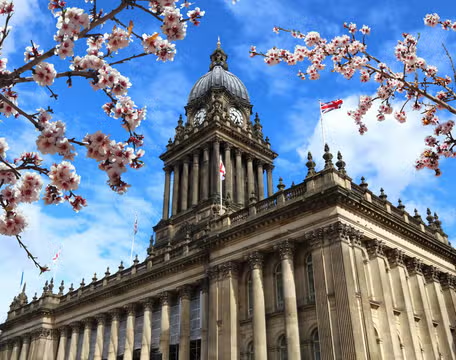
Later came the Industrial Revolution, and Leeds became a hub of the textile industry. During this period, dozens of factories were built, the railway network developed, and large-scale migration took place. All of this contributed to the emergence of new cultural centres. By the end of the 19th century, the city could boast libraries, theatres, and grand public buildings. In 1858, Leeds Town Hall was constructed, becoming a symbol of cultural ambition and a venue for concerts and exhibitions.
The 20th Century: A Diversity of Art and Creativity
With each passing year, the culture of Leeds continued to grow. In the 20th century, the city saw the opening of universities, theatres (Leeds Playhouse, Grand Theatre), the development of the film industry, and museums. Incidentally, the first motion pictures in the world were filmed in Leeds by Louis Le Prince in 1888.
Between 1903 and 1923, the Leeds Arts Club operated, integrating modernist ideas and supporting the feminist movement and radical artistic initiatives. Local artists and sculptors such as Barbara Hepworth and Henry Moore gained international recognition, and Leeds College of Art became a hub for avant-garde artistic innovation during the 1950s and 60s.
The Contemporary Period
Today, Leeds is home to over 30 artistic and cultural organisations, dozens of festivals, and regular events. Leeds Art Gallery houses one of the largest collections of 20th-century British art, while the sculpture triangle — Tate Modern, Yorkshire Sculpture Park, and the Henry Moore Institute — places the region at the forefront of contemporary sculpture.
The city’s music scene is represented by major events such as the Leeds Festival (which attracts over 75,000 visitors annually), as well as iconic venues like the O2 Academy and Brudenell Social Club. Leeds also boasts several world-class theatres and resident ballet and opera companies.
It is important to highlight that Leeds has a well-developed cultural infrastructure, a wide range of artistic and cultural institutions, and a vibrant festival and community initiative movement that attracts thousands of visitors each year. As of 2025, grant schemes are available for civic and charitable organisations implementing arts and social projects aimed at diverse social groups. These initiatives include workshops, public exhibitions, digital content, audiovisual works, and cultural events focused on inclusion and social cohesion.
We can conclude that culture in our city is in a state of constant development. Alongside the economy, cultural spaces continue to grow, attracting a significant number of tourists and investment in return.
We hope this article was informative and that you’ve learned something new about your home city.